

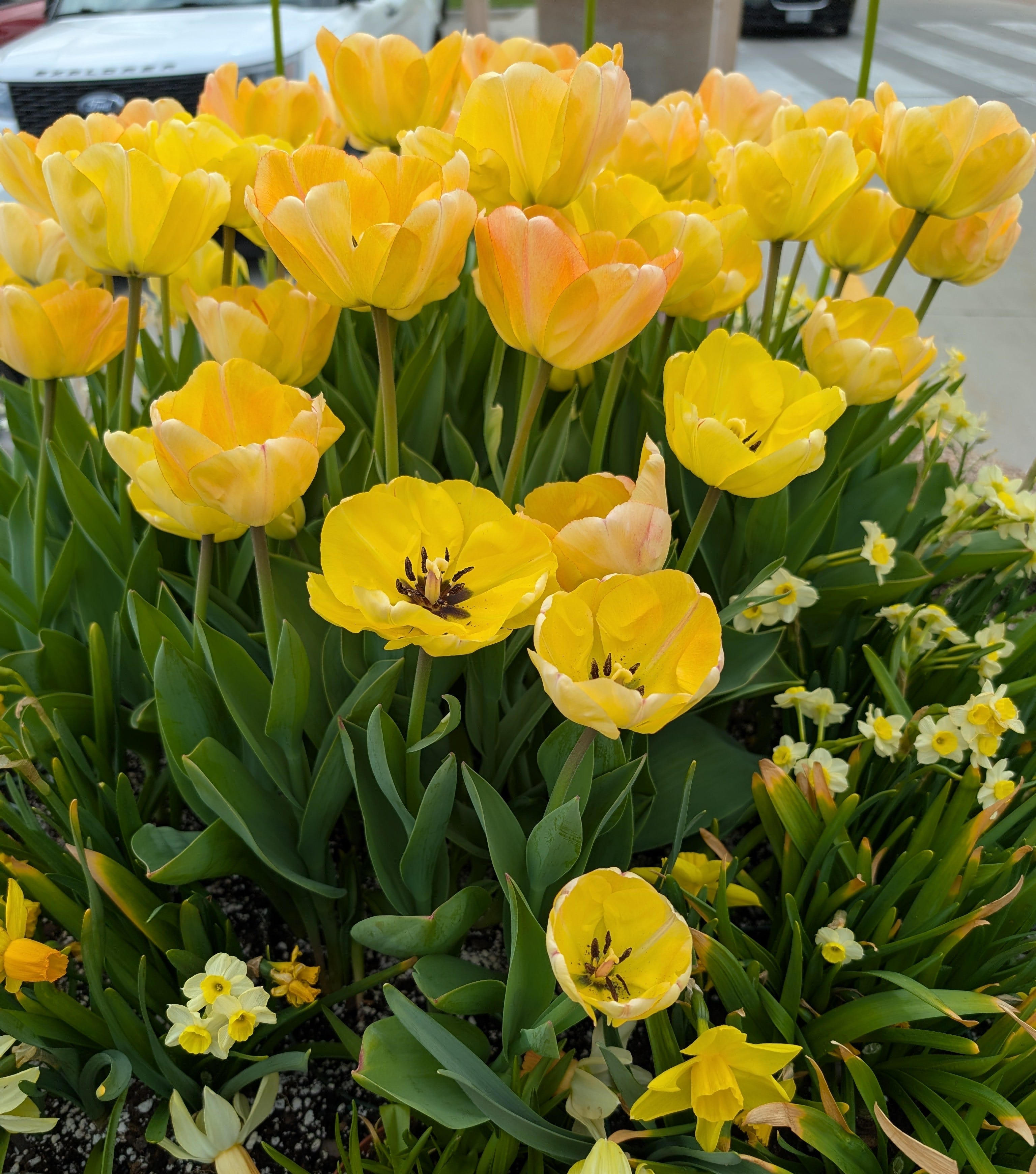
The house is quiet in a way that feels almost deliberate, as if it, too, has decided to rest.
For seven weeks, life moved at a quickened pace. There were classes to teach, conversations to hold, pages to write, paint to lay down before the light shifted, and so many exhibitions. The days are full in the way we often hope for; meaningful, engaged, threaded with purpose.
But still, full is full. Even the good things, gathered one on top of another, begin to ask something of the body. So this morning, I put myself in what I half-jokingly call rehab. Which is to say: I sat in my front porch rocker and rocked in the sunshine.
Forty-five minutes, no agenda, no output. Just the warmth of morning light on my arms, the low chorus of birds moving through the trees, and the small, persistent industry of something building a nest beneath the front porch. I couldn’t see it, only hear the soft rustle and scratch, work happening just out of sight.
It felt, in its own way, like being let back into the world.
This week was the flower trip with Marilyn, marking ten years of this now. A ritual that has outlasted schedules, seasons, and whatever else life has rearranged around us.
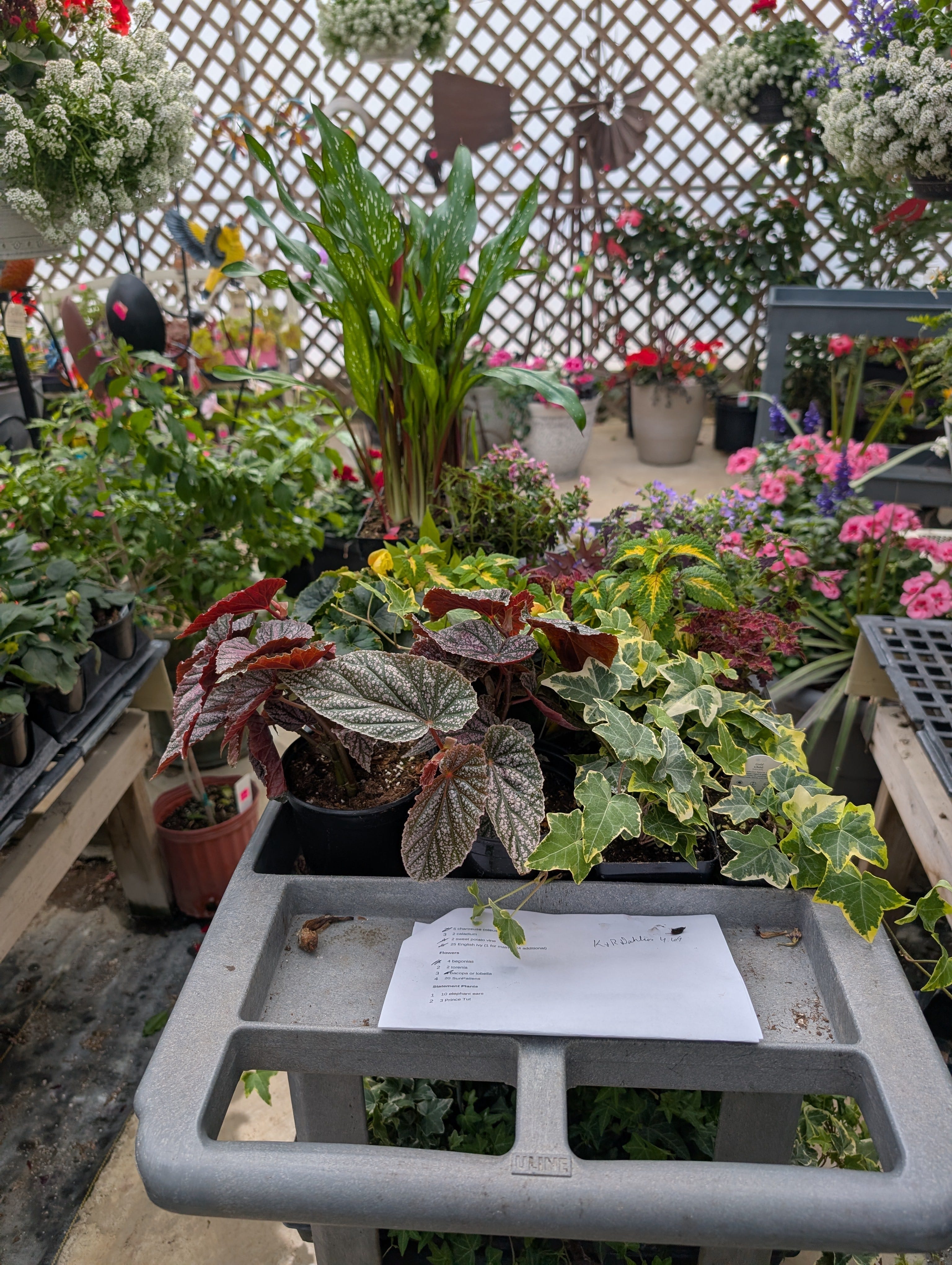
We arrive with a plan. And by we, I mean me. I always do. And then, almost immediately, the plan begins to loosen its grip.
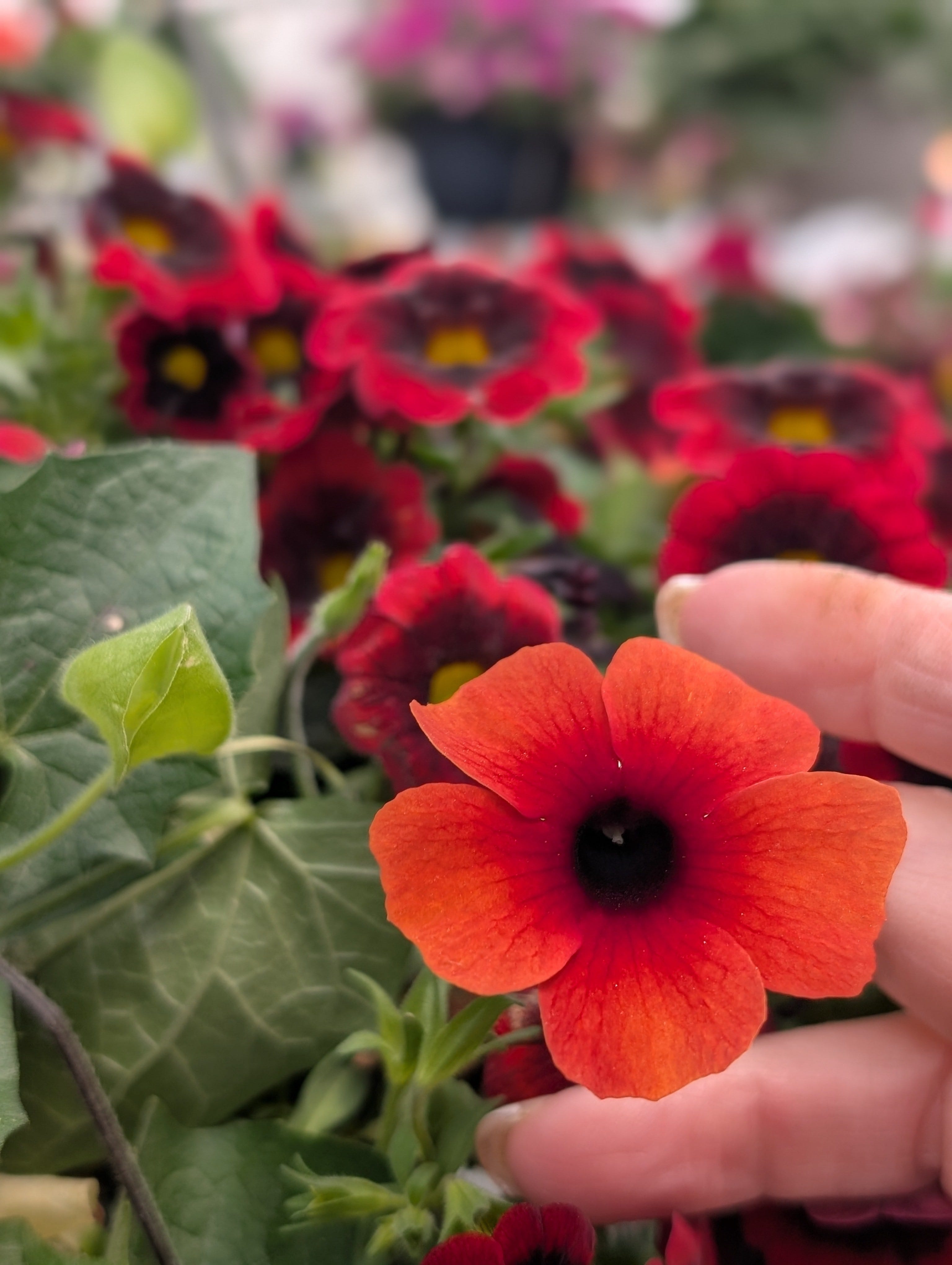
It starts innocently enough. A stray perrenial, a new to me annual I wasn’t looking for but can’t quite walk past. One plant goes into the cart, then another, each one carrying with it a small conviction: this will be the year that all my planters and gardens perform to perfection.
But the truth is, the cart tells a different story as it fills. It is less about control. More about listening.
Chartreuse against deep green. The quiet pull of a color that doesn’t announce itself but insists on being included. The moment when you stop asking what should go together and start noticing what already does.
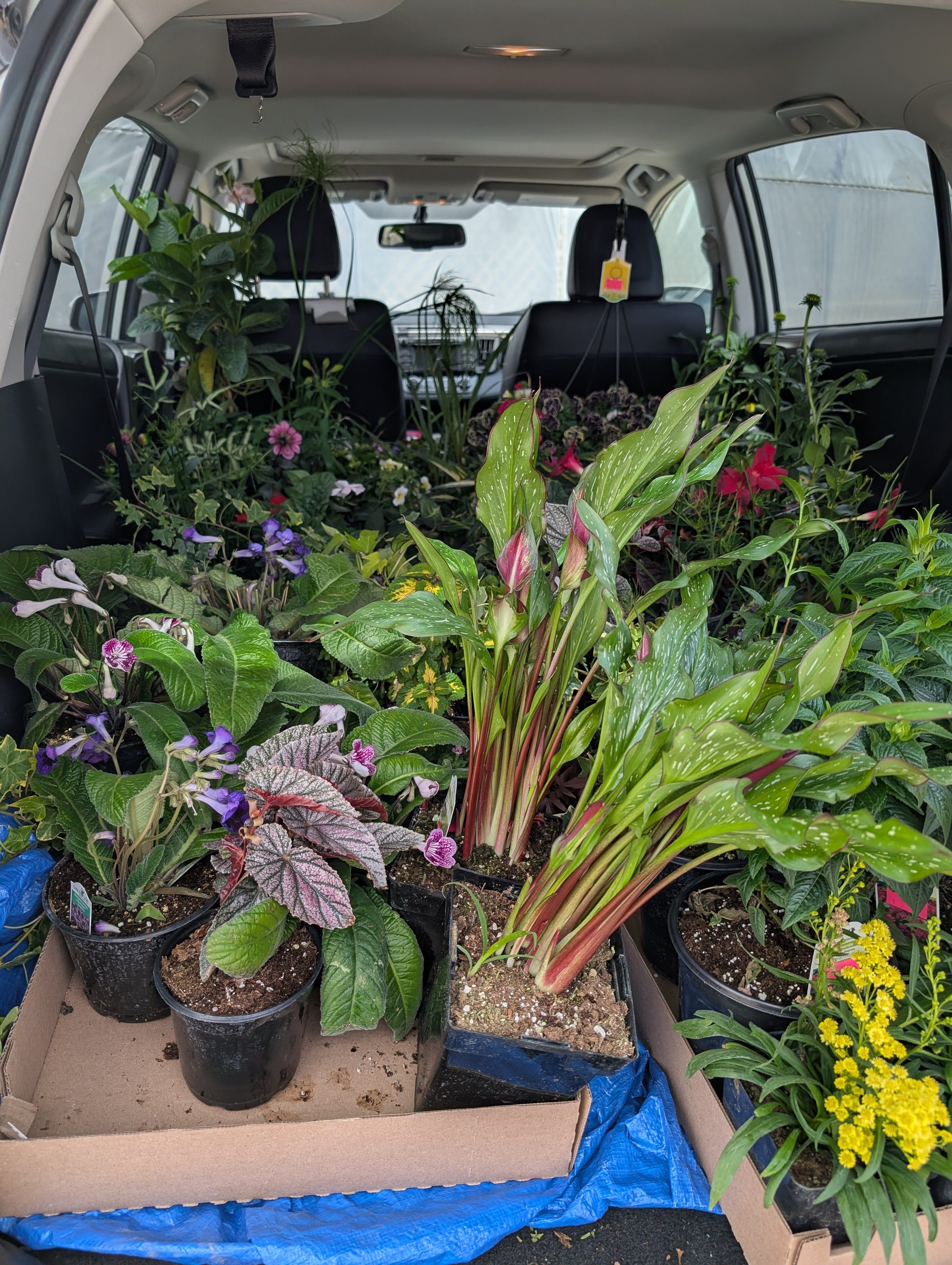
By the time we reach the car, the abundance is unmistakable. Plants stacked in gentle defiance of space. We laugh, because there is always a moment when it tips from reasonable into something else. Not excess, exactly. Something closer to devotion.
And then there was the watercolor class.
Six weeks of watching something take shape. Slowly at first, then all at once. Students learning to see differently. To hold back when instinct says push. To wait for the paper to dry, for the pigment to settle, for the image to declare itself rather than forcing it forward.
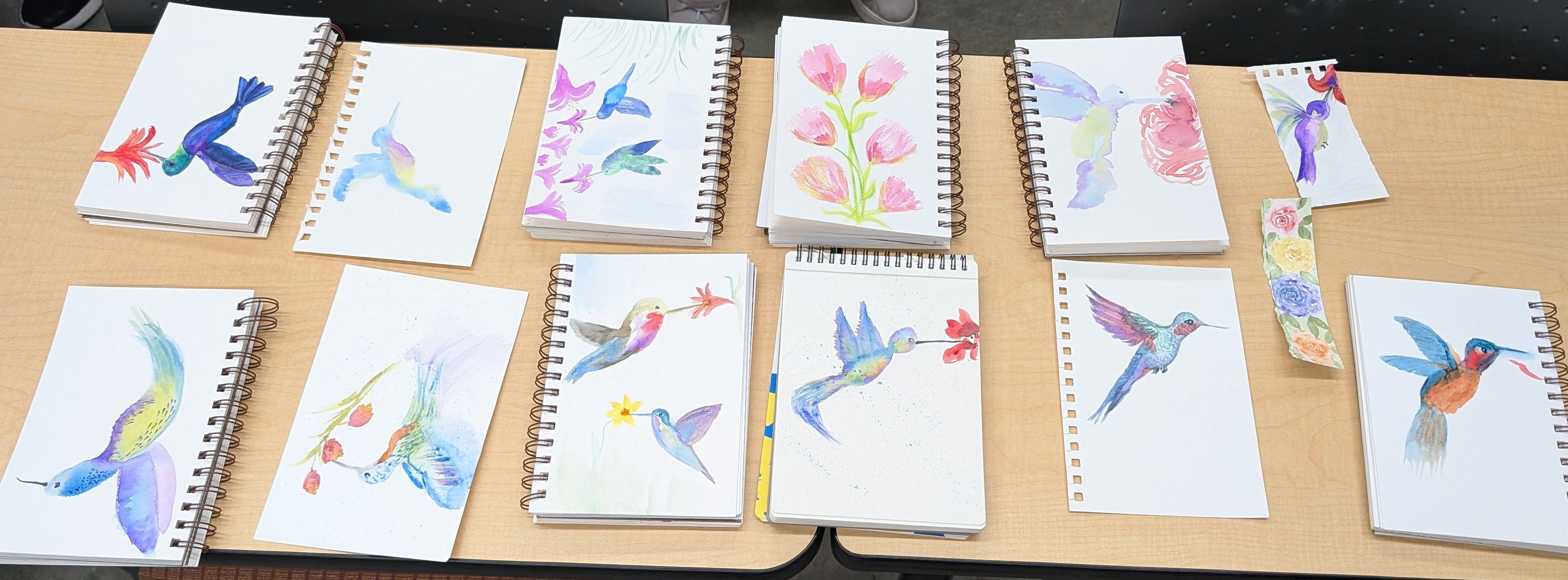
Class ended on the highest of notes.
Not because everything was perfect. It wasn’t. But because something shifted. You could feel it in the room. That moment when a painting stops being an exercise and becomes a conversation. When the hand is no longer trying to control every edge, and instead begins to trust what is happening on the page. The students are learning to be patient with the paint and trust themselves.
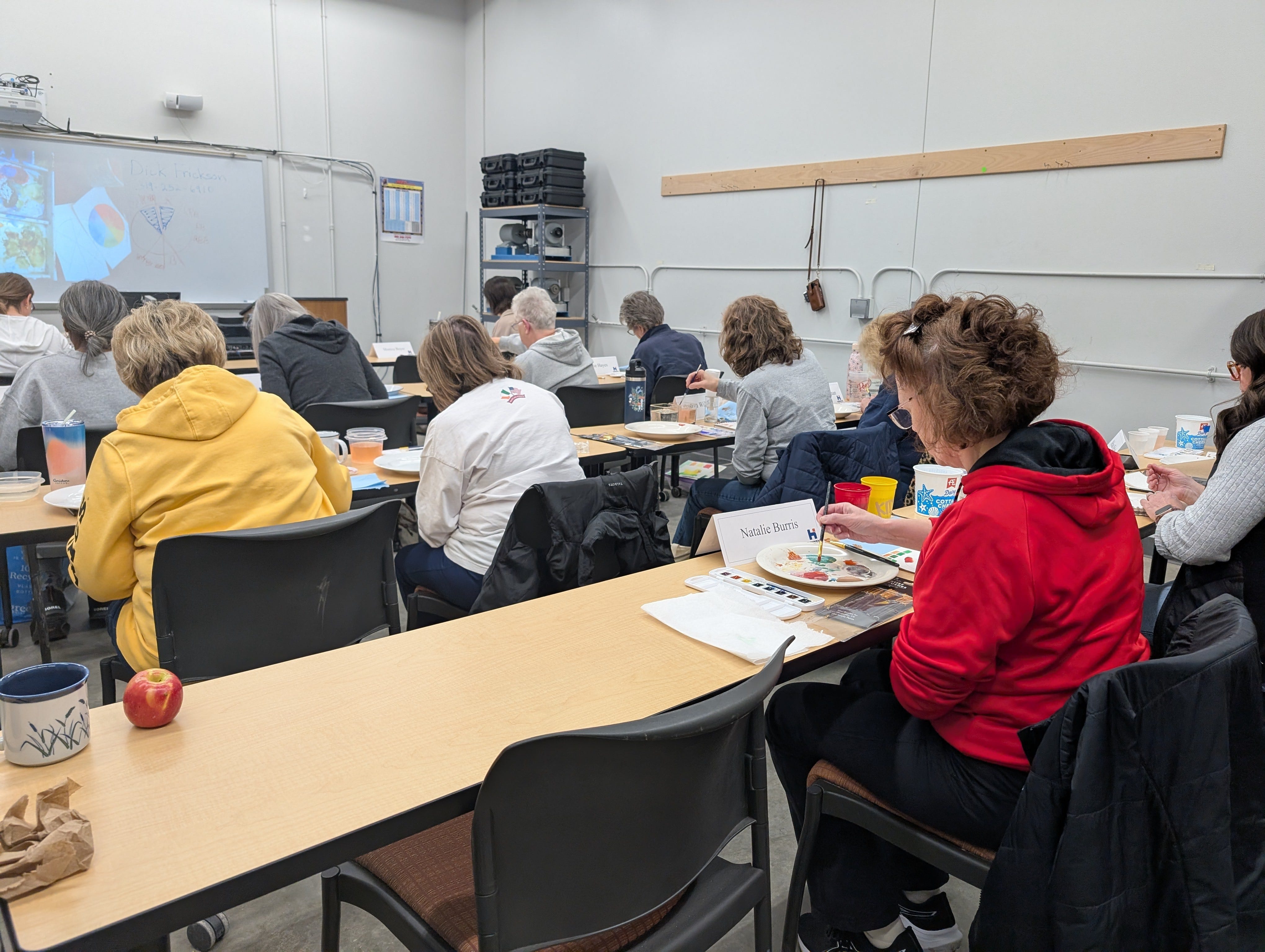
That kind of learning has a particular energy to it. It’s bright, expansive, alive.
And it asks something of you, too.
To hold the space. To stay present. To notice each small turn as it happens. All of this, in its own way, a form of tending.
This is the part we don’t always name. The after.
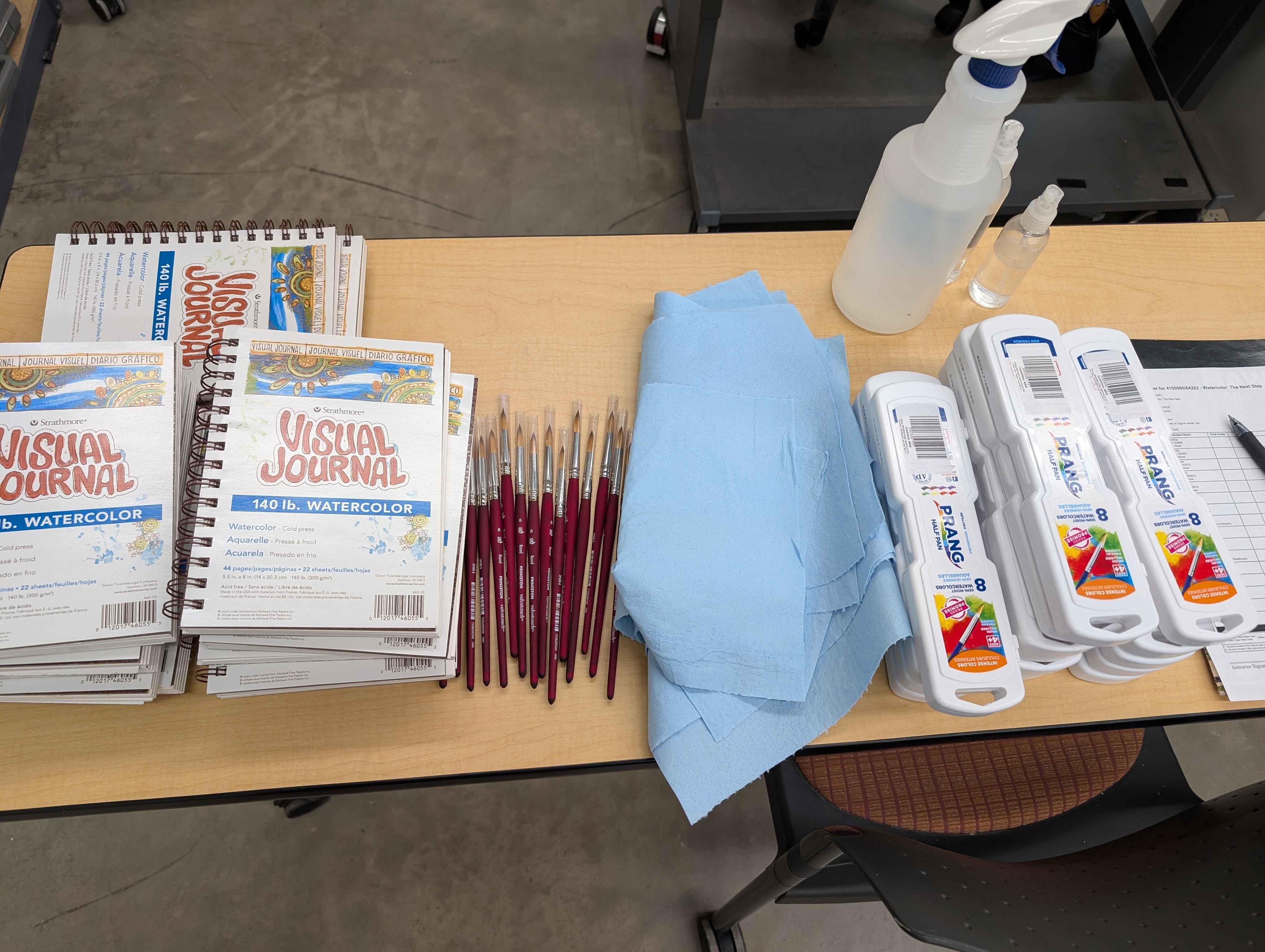
After the class ends. After the cart is full. After the conversations and the decisions and the small acts of attention that accumulate into something meaningful.
There is a cost to that kind of presence. Not a negative one. But a real one. The body and the mind keep track. If you’re not careful, you carry that forward as if the work is still happening, as if you are still needed in the same way.
But the creature under the porch doesn’t build without pause. It gathers, places, adjusts. Then, inevitably, there is stillness. Not because the work is finished, but because rest is part of how the work continues.
Sitting in the sun this morning, I could feel the edges of the last seven weeks beginning to soften.
No urgency. No demand to turn the experience into something immediately useful, shareable, or complete. Just the quiet recognition that this, too, is part of the creative life.
Not separate from it. But essential to it.
The flowers will be planted. The paintings will continue. Another class will begin. But today, the work is smaller. To sit, to listen. To let something settle into place without interference.
Like the students, I’m learning to trust that what has been gathered, over weeks, over years, does not disappear in the pause; instead, it deepens.
Like roots finding their way, slowly, in the dark.
If you’ve been moving at a pace that hasn’t left room to breathe, there’s a companion piece to this—Seasons of the Creative Life—where this pattern first began to take shape.
Reflection: Where in your life have you mistaken rest for falling behind? The creative life keeps its own time, and it rarely matches the one we try to impose on it.
If this kind of reflection meets you where you are, I’d be honored to have you continue the conversation as a paid subscriber.
Resting with no agenda definitely makes a difference in my mental health. I recently learned about circaseptan rhythms - we were made to rest every seven days! Thanks sharing your wisdom!